November 18, 2025
TikTok’s Digital Revolution in Central Asia
November 18, 2025
TikTok’s Digital Revolution in Central Asia
How TikTok is turning Central Asia into a digital powerhouse, blending local entrepreneurship with global algorithmic dominance to redefine growth.
TikTok’s Frontier Strategy: Engineering a Digital Revolution from Almaty
If you look at the global map of digital innovation, eyes naturally drift toward Silicon Valley, Shenzhen, or London. But the real story of the next decade isn't happening in established tech hubs; it is happening in the hungry, greenfield markets of Central Asia. Specifically, in Almaty, Kazakhstan.
While the West debates algorithmic regulation and market saturation, a different narrative is unfolding in the East. Julia Kushnir, TikTok’s Head of Business Development for Eastern Europe and Central Asia, isn’t just selling ad space. She is effectively architecting a digital economy from the ground up.
The recent insight into TikTok’s operations in Almaty reveals a fascinating case study in "intrapreneurship"—building a startup culture within a massive tech incumbent. Four years ago, TikTok’s presence in Kazakhstan and Azerbaijan was nonexistent. There were no client relationships, no established infrastructure, and no roadmap. Today, that region is a powerhouse, recognized internally at TikTok as a top performer globally.
This isn't just a corporate success story; it is a signal. It demonstrates that the center of gravity for digital adoption is shifting. The emerging markets are no longer just following the playbook; in many cases, they are writing it, driven by a necessity for innovation and a lack of legacy infrastructure holding them back.
The Leapfrog Effect and Ecosystem Building
The trend we are witnessing here is the classic "technology leapfrog," but accelerated by the creator economy. In mature markets, digital marketing evolved slowly: from print to desktop web, to mobile, to social. In Central Asia, businesses are bypassing the intermediate stages and plugging directly into the hyper-accelerated world of short-form video and algorithmic commerce.
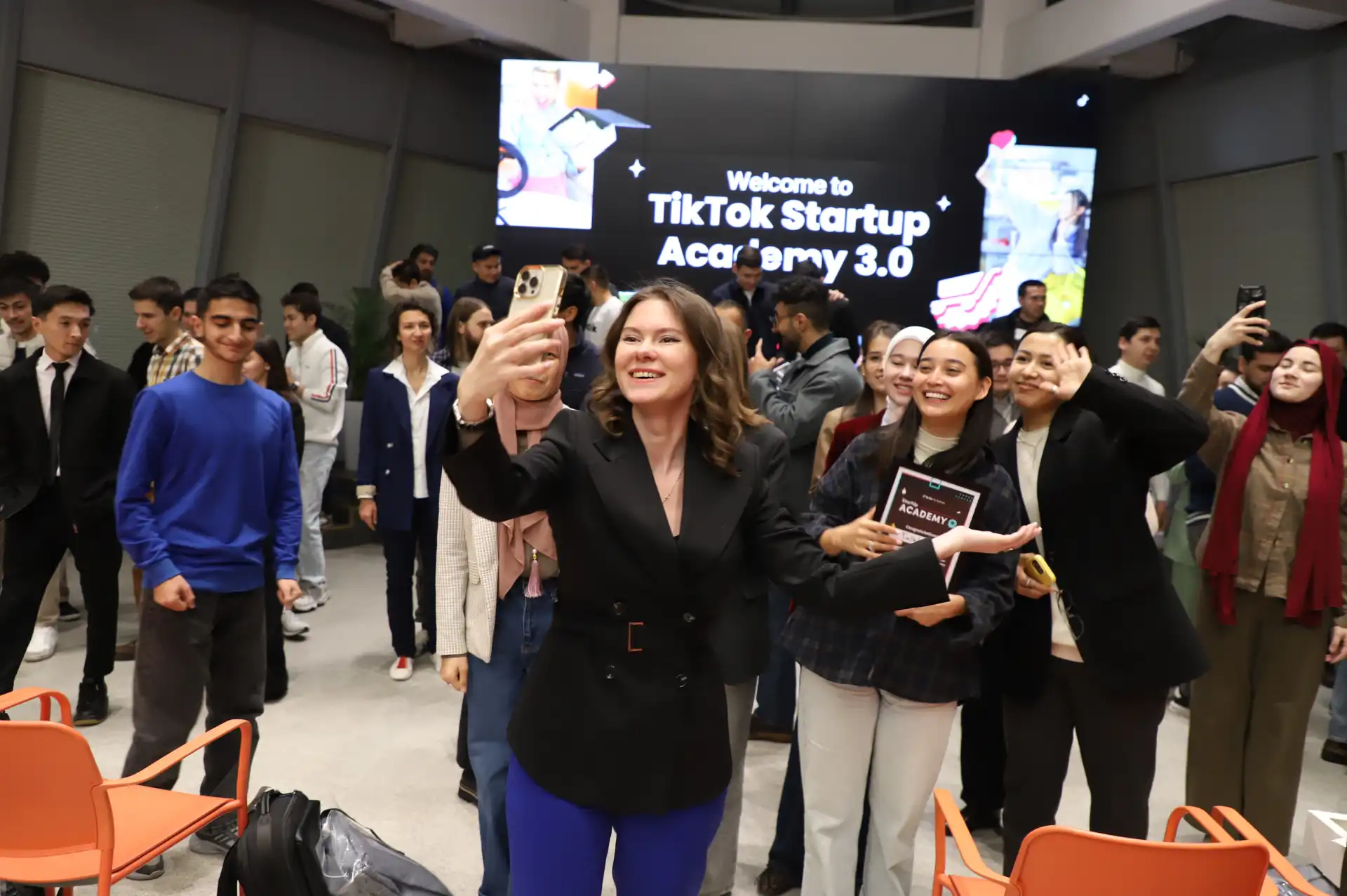
Kushnir’s team didn't just onboard clients; they had to educate an entire region on digital fluency. By launching initiatives like the TikTok Startup Academy, they moved beyond the role of a vendor and became an infrastructure provider. They are funding, mentoring, and scaling the very businesses that will eventually sustain their platform.
This "ecosystem first" approach is critical. In the West, platforms fight for a slice of the pie. In emerging markets, smart platforms bake the pie. By actively shaping the business models of local startups—from FMCG to fintech—TikTok ensures that these companies grow up "native" to the vertical video format.
This creates a symbiotic relationship where the platform and the local economy grow in lockstep. It represents a shift from extractive tech capitalism (entering a market to harvest data/revenue) to generative tech capitalism (entering a market to build capacity). The result is a region that is innovative, creative, and buzzing with entrepreneurial energy that rivals the early days of the dot-com boom.
The AI and AIO Layer: Fueling the Algorithm
While the surface story is about human relationships and business development, the underlying engine is pure Artificial Intelligence and Intelligence Orchestration (AIO).
The most telling detail in TikTok’s report is the specific achievement of Kushnir’s team: winning the global Product Adoption Challenge by installing the most ad pixels onto new websites. To the layperson, a "pixel" is just a piece of code. To an AI analyst, this is the holy grail of data infrastructure.
The TikTok algorithm relies on signal density. It needs to know what happens after a user sees a video. Did they buy? Did they browse? Did they sign up? By aggressively driving pixel adoption in a region that was previously "data dark," the Almaty team is essentially feeding the machine. They are building the neural pathways that allow TikTok’s AI to understand the consumer behavior of millions of people in Central Asia.
This is where AIO comes into play. AIO isn't just about using AI tools; it is about optimizing human workflows to maximize AI performance. The team’s work with the TikTok Startup Academy is a prime example of AIO. They are training human entrepreneurs to structure their content, products, and data in a way that the algorithm favors.
They are not just teaching marketing; they are teaching "algorithmic compatibility." When a local Kazakh startup learns how to hook an audience in three seconds, or how to structure a landing page for better pixel tracking, they are optimizing their business for an AI-mediated world. The Almaty team’s success lies in bridging the gap between raw human creativity and the rigid data requirements of one of the world’s most sophisticated recommendation engines.
Strategic Implications for Global Business
For brands, investors, and tech leaders watching from the sidelines, the developments in Almaty offer several critical takeaways:
Data Infrastructure is the New Oil: The team that wins the "pixel war" wins the market. If you are expanding into a new region, your first priority shouldn't just be brand awareness; it should be establishing the technical infrastructure to capture signal data.
The "Intrapreneur" Model Works: Kushnir’s success validates the model of giving local teams autonomy. Treating a regional office like a startup rather than a satellite branch fosters agility and resilience that centralized control cannot match.
Emerging Markets are Innovation Labs: Don't look to emerging markets just for scale; look to them for speed. Without the burden of legacy systems, regions like Central Asia are adopting next-gen commerce models (like live shopping and social commerce) faster than the US or Europe.
Education as a Growth Strategy: If the market isn't ready for your product, your job is to educate them until they are. The TikTok Startup Academy proves that investing in the success of your potential clients is the highest ROI marketing activity you can undertake.
Cross-Border Fluidity: The Almaty team works across Dubai, Singapore, and Europe. The modern digital workforce is borderless, and businesses that can navigate cross-cultural nuances while maintaining a unified digital strategy will dominate.
The Bottom Line
The future of the digital economy isn't being written solely in boardrooms in San Francisco; it's being coded, filmed, and optimized in places like Almaty. When you combine the hunger of an emerging market with the precision of global AI infrastructure, you don't just get growth—you get a revolution.
Also Read:


How TikTok is turning Central Asia into a digital powerhouse, blending local entrepreneurship with global algorithmic dominance to redefine growth.
TikTok’s Frontier Strategy: Engineering a Digital Revolution from Almaty
If you look at the global map of digital innovation, eyes naturally drift toward Silicon Valley, Shenzhen, or London. But the real story of the next decade isn't happening in established tech hubs; it is happening in the hungry, greenfield markets of Central Asia. Specifically, in Almaty, Kazakhstan.
While the West debates algorithmic regulation and market saturation, a different narrative is unfolding in the East. Julia Kushnir, TikTok’s Head of Business Development for Eastern Europe and Central Asia, isn’t just selling ad space. She is effectively architecting a digital economy from the ground up.
The recent insight into TikTok’s operations in Almaty reveals a fascinating case study in "intrapreneurship"—building a startup culture within a massive tech incumbent. Four years ago, TikTok’s presence in Kazakhstan and Azerbaijan was nonexistent. There were no client relationships, no established infrastructure, and no roadmap. Today, that region is a powerhouse, recognized internally at TikTok as a top performer globally.
This isn't just a corporate success story; it is a signal. It demonstrates that the center of gravity for digital adoption is shifting. The emerging markets are no longer just following the playbook; in many cases, they are writing it, driven by a necessity for innovation and a lack of legacy infrastructure holding them back.
The Leapfrog Effect and Ecosystem Building
The trend we are witnessing here is the classic "technology leapfrog," but accelerated by the creator economy. In mature markets, digital marketing evolved slowly: from print to desktop web, to mobile, to social. In Central Asia, businesses are bypassing the intermediate stages and plugging directly into the hyper-accelerated world of short-form video and algorithmic commerce.
Kushnir’s team didn't just onboard clients; they had to educate an entire region on digital fluency. By launching initiatives like the TikTok Startup Academy, they moved beyond the role of a vendor and became an infrastructure provider. They are funding, mentoring, and scaling the very businesses that will eventually sustain their platform.
This "ecosystem first" approach is critical. In the West, platforms fight for a slice of the pie. In emerging markets, smart platforms bake the pie. By actively shaping the business models of local startups—from FMCG to fintech—TikTok ensures that these companies grow up "native" to the vertical video format.
This creates a symbiotic relationship where the platform and the local economy grow in lockstep. It represents a shift from extractive tech capitalism (entering a market to harvest data/revenue) to generative tech capitalism (entering a market to build capacity). The result is a region that is innovative, creative, and buzzing with entrepreneurial energy that rivals the early days of the dot-com boom.
The AI and AIO Layer: Fueling the Algorithm
While the surface story is about human relationships and business development, the underlying engine is pure Artificial Intelligence and Intelligence Orchestration (AIO).
The most telling detail in TikTok’s report is the specific achievement of Kushnir’s team: winning the global Product Adoption Challenge by installing the most ad pixels onto new websites. To the layperson, a "pixel" is just a piece of code. To an AI analyst, this is the holy grail of data infrastructure.
The TikTok algorithm relies on signal density. It needs to know what happens after a user sees a video. Did they buy? Did they browse? Did they sign up? By aggressively driving pixel adoption in a region that was previously "data dark," the Almaty team is essentially feeding the machine. They are building the neural pathways that allow TikTok’s AI to understand the consumer behavior of millions of people in Central Asia.
This is where AIO comes into play. AIO isn't just about using AI tools; it is about optimizing human workflows to maximize AI performance. The team’s work with the TikTok Startup Academy is a prime example of AIO. They are training human entrepreneurs to structure their content, products, and data in a way that the algorithm favors.
They are not just teaching marketing; they are teaching "algorithmic compatibility." When a local Kazakh startup learns how to hook an audience in three seconds, or how to structure a landing page for better pixel tracking, they are optimizing their business for an AI-mediated world. The Almaty team’s success lies in bridging the gap between raw human creativity and the rigid data requirements of one of the world’s most sophisticated recommendation engines.
Strategic Implications for Global Business
For brands, investors, and tech leaders watching from the sidelines, the developments in Almaty offer several critical takeaways:
Data Infrastructure is the New Oil: The team that wins the "pixel war" wins the market. If you are expanding into a new region, your first priority shouldn't just be brand awareness; it should be establishing the technical infrastructure to capture signal data.
The "Intrapreneur" Model Works: Kushnir’s success validates the model of giving local teams autonomy. Treating a regional office like a startup rather than a satellite branch fosters agility and resilience that centralized control cannot match.
Emerging Markets are Innovation Labs: Don't look to emerging markets just for scale; look to them for speed. Without the burden of legacy systems, regions like Central Asia are adopting next-gen commerce models (like live shopping and social commerce) faster than the US or Europe.
Education as a Growth Strategy: If the market isn't ready for your product, your job is to educate them until they are. The TikTok Startup Academy proves that investing in the success of your potential clients is the highest ROI marketing activity you can undertake.
Cross-Border Fluidity: The Almaty team works across Dubai, Singapore, and Europe. The modern digital workforce is borderless, and businesses that can navigate cross-cultural nuances while maintaining a unified digital strategy will dominate.
The Bottom Line
The future of the digital economy isn't being written solely in boardrooms in San Francisco; it's being coded, filmed, and optimized in places like Almaty. When you combine the hunger of an emerging market with the precision of global AI infrastructure, you don't just get growth—you get a revolution.
Also Read:
Other Blogs
Other Blogs
Check our other project Blogs with useful insight and information for your businesses



Other Blogs
Other Blogs
Check our other project Blogs with useful insight and information for your businesses