November 11, 2025
TikTok's Holiday Gamble: Can AI Police Its Exploding Shop?
November 11, 2025
TikTok's Holiday Gamble: Can AI Police Its Exploding Shop?
TikTok Shop preps its AI and human mods for a massive holiday surge. As social commerce explodes, can its safety net hold against fakes and fraud?
The Social Commerce Gauntlet
Black Friday is no longer just for Amazon and big-box retailers. It's a full-contact sport on social media, and TikTok Shop has become a heavyweight contender, pulling in a staggering $100 million in U.S. sales on a single day last Black Friday.
Now, the platform is bracing for the 2025 holiday tidal wave. But with massive volume comes a darker current: counterfeit goods, fraudulent sellers, and sophisticated scams. The company is on the defensive, releasing its safety playbook to prove it's more than just a viral marketplace—it's a secure one. Between January and June 2025 alone, it rejected 1.4 million seller applications and blocked 70 million products before they ever went live. The holiday rush will put those defenses to the ultimate test.
From Viral Videos to Verified Value
This isn't just about holiday sales figures. This is the critical maturation phase of social commerce. TikTok is attempting to compress decades of e-commerce trust-building (think Amazon's A-to-z Guarantee or eBay's seller ratings) into a few hyper-growth years.
The core challenge is balancing frictionless discovery—the "TikTok made me buy it" magic—with the robust governance required of a major retail platform. The "dupe" culture that fueled its rise is a liability when it metastasizes into a full-blown counterfeit crisis. If TikTok Shop can't protect consumers and legitimate brands, the trust that underpins all commerce will evaporate, no matter how good the algorithm is at serving up viral videos.
The Algorithm as Gatekeeper
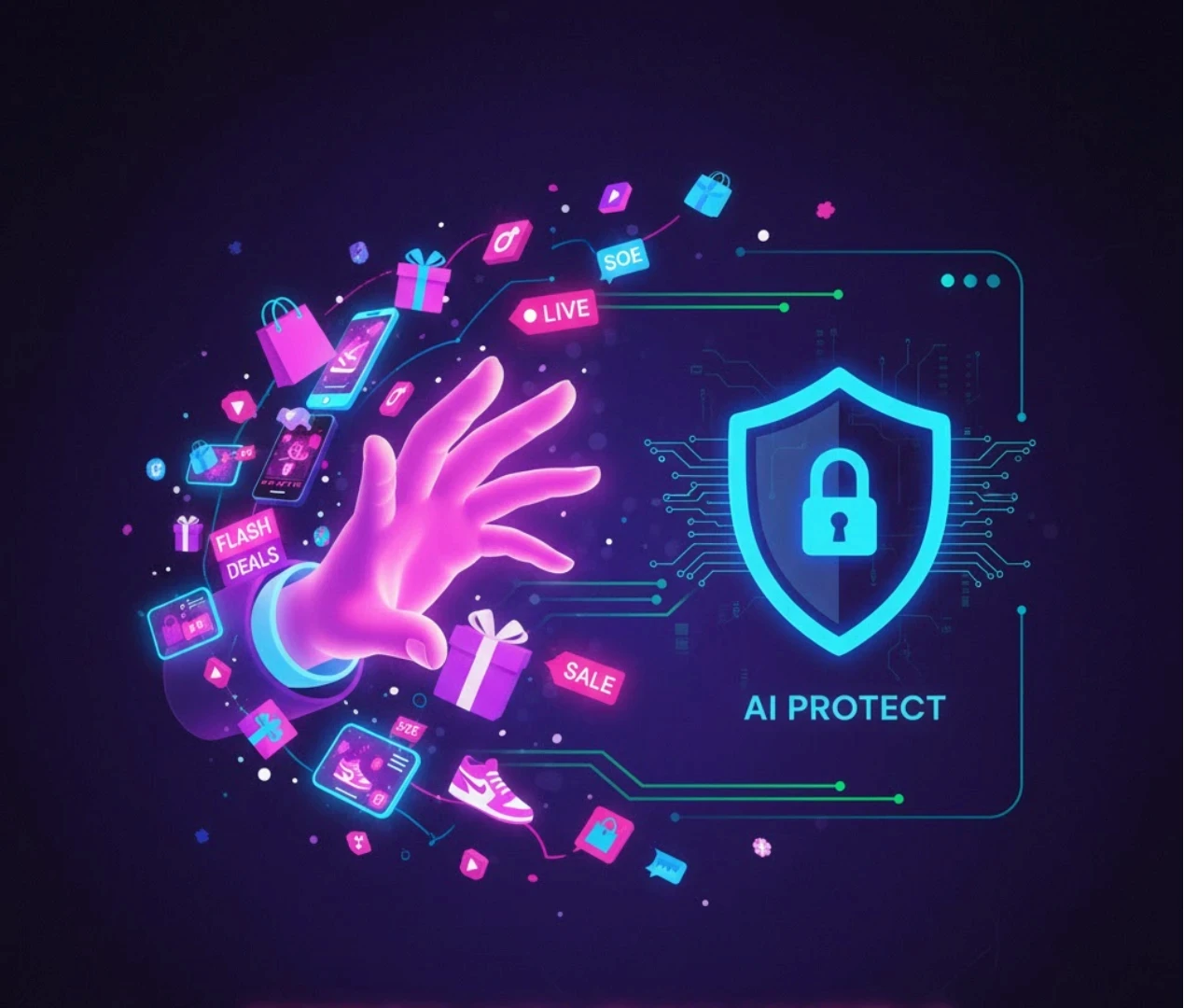
At the heart of TikTok's defense is a massive AI and automation layer. This is AIO (AI Orchestration) in action. The company boasts that its systems catch 99.5% of violative listings before a customer ever sees them. This automated gatekeeper is responsible for vetting millions of seller applications, scanning tens of millions of product listings, and monitoring transactions in real-time for signals of fraud.
But this AI is a double-edged sword. Sellers have persistently complained of false positives, where legitimate products are erroneously flagged as "restricted" or "violative." It reveals the immense difficulty of training an algorithm to understand the nuance of global commerce, cultural trends, and counterfeit tactics at blinding speed. For the holiday surge, TikTok isn't relying on AI alone; it's mobilizing its human moderation teams and extending support hours, creating a blended human-AI system to manage the flood.
Strategic and Industry Implications
For brands, sellers, and creators, TikTok's evolving governance isn't just background noise—it directly impacts strategy.
Seller Probation is the New Normal: The 60-day+ probation period for all new sellers is a clear signal. TikTok is prioritizing long-term seller quality over short-term quantity. New brands must factor this ramp-up period into their launch plans.
IP Protection is an Active Job: Brands cannot be passive. TikTok's Intellectual Property Protection Center is a tool, not a magic wand. It requires brands to actively register their trademarks and report infringements. It’s a game of digital whack-a-mole, and brands must be prepared to play.
Creator Curation Creates an Elite: TikTok is hand-picking sellers and creators for its main holiday campaigns, vetting them for their ability to fulfill high order volumes and provide good customer service. This merges influence with logistical reliability, creating a new, more trusted tier of commercial creator.
Fraud Detection Goes Both Ways: The platform's explicit focus on "buyer fraud" is notable. By investigating and compensating sellers for fraudulent returns, TikTok is trying to build a more balanced, two-sided marketplace. It's a signal to sellers that it will protect them, not just the customer, from abuse.
The Bottom Line
TikTok Shop’s holiday performance won't just be measured in sales figures. It’s a high-stakes public test of its ability to orchestrate trust at scale, blending AI detection with human oversight to build a real e-commerce empire from a viral trend.
Also Read:

TikTok Shop preps its AI and human mods for a massive holiday surge. As social commerce explodes, can its safety net hold against fakes and fraud?
The Social Commerce Gauntlet
Black Friday is no longer just for Amazon and big-box retailers. It's a full-contact sport on social media, and TikTok Shop has become a heavyweight contender, pulling in a staggering $100 million in U.S. sales on a single day last Black Friday.
Now, the platform is bracing for the 2025 holiday tidal wave. But with massive volume comes a darker current: counterfeit goods, fraudulent sellers, and sophisticated scams. The company is on the defensive, releasing its safety playbook to prove it's more than just a viral marketplace—it's a secure one. Between January and June 2025 alone, it rejected 1.4 million seller applications and blocked 70 million products before they ever went live. The holiday rush will put those defenses to the ultimate test.
From Viral Videos to Verified Value
This isn't just about holiday sales figures. This is the critical maturation phase of social commerce. TikTok is attempting to compress decades of e-commerce trust-building (think Amazon's A-to-z Guarantee or eBay's seller ratings) into a few hyper-growth years.
The core challenge is balancing frictionless discovery—the "TikTok made me buy it" magic—with the robust governance required of a major retail platform. The "dupe" culture that fueled its rise is a liability when it metastasizes into a full-blown counterfeit crisis. If TikTok Shop can't protect consumers and legitimate brands, the trust that underpins all commerce will evaporate, no matter how good the algorithm is at serving up viral videos.
The Algorithm as Gatekeeper
At the heart of TikTok's defense is a massive AI and automation layer. This is AIO (AI Orchestration) in action. The company boasts that its systems catch 99.5% of violative listings before a customer ever sees them. This automated gatekeeper is responsible for vetting millions of seller applications, scanning tens of millions of product listings, and monitoring transactions in real-time for signals of fraud.
But this AI is a double-edged sword. Sellers have persistently complained of false positives, where legitimate products are erroneously flagged as "restricted" or "violative." It reveals the immense difficulty of training an algorithm to understand the nuance of global commerce, cultural trends, and counterfeit tactics at blinding speed. For the holiday surge, TikTok isn't relying on AI alone; it's mobilizing its human moderation teams and extending support hours, creating a blended human-AI system to manage the flood.
Strategic and Industry Implications
For brands, sellers, and creators, TikTok's evolving governance isn't just background noise—it directly impacts strategy.
Seller Probation is the New Normal: The 60-day+ probation period for all new sellers is a clear signal. TikTok is prioritizing long-term seller quality over short-term quantity. New brands must factor this ramp-up period into their launch plans.
IP Protection is an Active Job: Brands cannot be passive. TikTok's Intellectual Property Protection Center is a tool, not a magic wand. It requires brands to actively register their trademarks and report infringements. It’s a game of digital whack-a-mole, and brands must be prepared to play.
Creator Curation Creates an Elite: TikTok is hand-picking sellers and creators for its main holiday campaigns, vetting them for their ability to fulfill high order volumes and provide good customer service. This merges influence with logistical reliability, creating a new, more trusted tier of commercial creator.
Fraud Detection Goes Both Ways: The platform's explicit focus on "buyer fraud" is notable. By investigating and compensating sellers for fraudulent returns, TikTok is trying to build a more balanced, two-sided marketplace. It's a signal to sellers that it will protect them, not just the customer, from abuse.
The Bottom Line
TikTok Shop’s holiday performance won't just be measured in sales figures. It’s a high-stakes public test of its ability to orchestrate trust at scale, blending AI detection with human oversight to build a real e-commerce empire from a viral trend.
Also Read:
Other Blogs
Other Blogs
Check our other project Blogs with useful insight and information for your businesses

Other Blogs
Other Blogs
Check our other project Blogs with useful insight and information for your businesses