October 24, 2025
Inside TikTok’s AI-Infused Creator Awards The New Intersection of Influence, Culture, and Commerce
October 24, 2025
Inside TikTok’s AI-Infused Creator Awards The New Intersection of Influence, Culture, and Commerce
TikTok’s 2025 UK & Ireland Awards celebrate creators and advertisers — but behind the glitz, it’s a data-driven experiment in how AI and creativity are reshaping influence.
The Ceremony That’s More Than a Celebration
On November 13, TikTok will host the second annual TikTok Awards UK & Ireland — a high-energy showcase for creators, brands, and campaigns that have defined the platform this year.
Sponsored by Sky and hosted by AJ Odudu, the night will feature a live performance by Rizzle Kicks and categories spanning everything from food to entertainment to books.
But beneath the sparkle of trophies and hashtags lies a deeper narrative: TikTok isn’t just rewarding creativity — it’s mapping it.
Every nomination, vote, and category feeds back into an algorithmic feedback loop. The awards have quietly become a live dataset for creative performance, measuring what kind of content drives community, commerce, and cultural impact.
The Creator Economy’s New Mirror
Over 70 creators have been shortlisted, reflecting how TikTok’s influence now extends beyond trends into career paths.
Last year’s winners — including Myles Smith, Iain Ward (King of Chemo), and Kyra-Mae Turner — built massive audiences not through brand polish, but through authenticity, consistency, and platform fluency.
This year’s nominees follow the same pattern. Each represents a microcosm of TikTok’s evolution: creators as entrepreneurs, storytellers, and micro-media companies — all powered by algorithmic visibility and AI-assisted creativity.
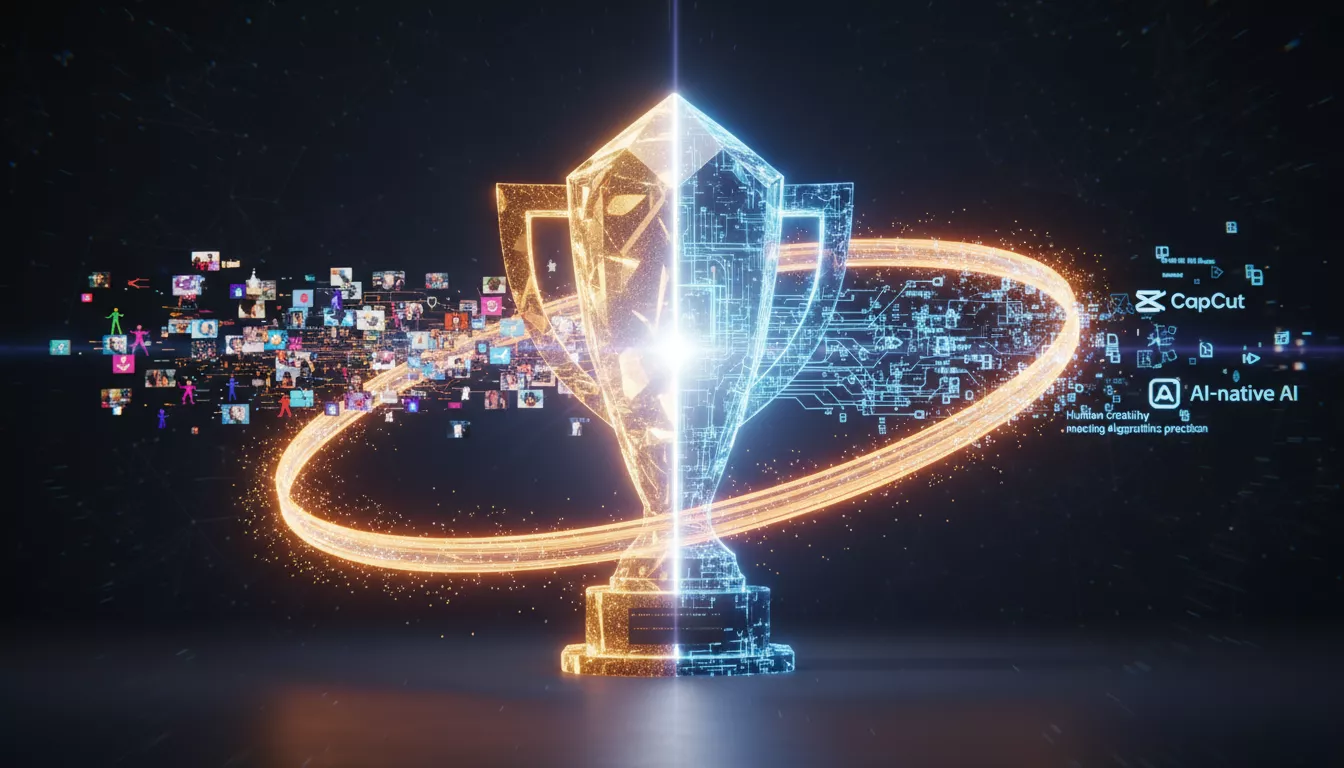
Tools like AIO, CapCut AI, and TikTok Symphony (the app’s generative ad system) have made it possible for creators to operate at agency-level quality — often solo. The awards are essentially recognizing a new creative class: AI-native talent.
AI Meets Advertising: The New Creative Frontier
Alongside creator categories, TikTok is also spotlighting advertisers in five performance-driven segments:
Greatest Impact
Greatest Creative
Greatest Performance
Greatest Branding
Greatest TikTok
Behind the judges’ decisions lies a growing AI backbone. TikTok’s ad engine, powered by machine learning attribution models, measures campaign effectiveness across micro-engagements — not just reach.
Each winner becomes a case study in human creativity meeting algorithmic precision. The campaigns that win this year will likely set the tone for 2026’s AI-integrated marketing strategies — blending narrative, emotion, and data.
Voting as Engagement Data
Voting for the awards is live within the app until October 29, and while it feels like a fun community event, it’s also an insight engine.
Every vote trains TikTok’s algorithm on what audiences value most — humor, relatability, aspiration, or storytelling. This real-time user behavior feeds directly into how TikTok’s recommendation AI refines creative ranking and trend detection.
What looks like fan participation is actually the platform fine-tuning its taste model.
What Marketers Can Learn
Creativity Is the New Data Strategy
Every creative output — from a dance trend to a 15-second ad — becomes an input for machine learning. The better the story, the smarter the system.AI Tools Don’t Replace Creators — They Amplify Them
The winners aren’t the ones using AI to automate, but to accelerate. Think editing, caption optimization, audience simulation, and predictive content testing.Culture Drives Conversion
The most successful TikTok campaigns aren’t about selling — they’re about syncing with social rhythm. AI helps track that rhythm, but human instinct sets it.
The Bottom Line
The TikTok Awards aren’t just another industry gala. They’re an annual snapshot of how AI, culture, and community intersect on one of the world’s most influential platforms.
As creators evolve into brands and advertisers become storytellers, TikTok is quietly rewriting what recognition means in the digital age — turning creativity itself into data.
Because on TikTok, the future of influence isn’t about who performs best on stage.
It’s about who trains the algorithm of culture first.
Also read:
TikTok’s 2025 UK & Ireland Awards celebrate creators and advertisers — but behind the glitz, it’s a data-driven experiment in how AI and creativity are reshaping influence.
The Ceremony That’s More Than a Celebration
On November 13, TikTok will host the second annual TikTok Awards UK & Ireland — a high-energy showcase for creators, brands, and campaigns that have defined the platform this year.
Sponsored by Sky and hosted by AJ Odudu, the night will feature a live performance by Rizzle Kicks and categories spanning everything from food to entertainment to books.
But beneath the sparkle of trophies and hashtags lies a deeper narrative: TikTok isn’t just rewarding creativity — it’s mapping it.
Every nomination, vote, and category feeds back into an algorithmic feedback loop. The awards have quietly become a live dataset for creative performance, measuring what kind of content drives community, commerce, and cultural impact.
The Creator Economy’s New Mirror
Over 70 creators have been shortlisted, reflecting how TikTok’s influence now extends beyond trends into career paths.
Last year’s winners — including Myles Smith, Iain Ward (King of Chemo), and Kyra-Mae Turner — built massive audiences not through brand polish, but through authenticity, consistency, and platform fluency.
This year’s nominees follow the same pattern. Each represents a microcosm of TikTok’s evolution: creators as entrepreneurs, storytellers, and micro-media companies — all powered by algorithmic visibility and AI-assisted creativity.
Tools like AIO, CapCut AI, and TikTok Symphony (the app’s generative ad system) have made it possible for creators to operate at agency-level quality — often solo. The awards are essentially recognizing a new creative class: AI-native talent.
AI Meets Advertising: The New Creative Frontier
Alongside creator categories, TikTok is also spotlighting advertisers in five performance-driven segments:
Greatest Impact
Greatest Creative
Greatest Performance
Greatest Branding
Greatest TikTok
Behind the judges’ decisions lies a growing AI backbone. TikTok’s ad engine, powered by machine learning attribution models, measures campaign effectiveness across micro-engagements — not just reach.
Each winner becomes a case study in human creativity meeting algorithmic precision. The campaigns that win this year will likely set the tone for 2026’s AI-integrated marketing strategies — blending narrative, emotion, and data.
Voting as Engagement Data
Voting for the awards is live within the app until October 29, and while it feels like a fun community event, it’s also an insight engine.
Every vote trains TikTok’s algorithm on what audiences value most — humor, relatability, aspiration, or storytelling. This real-time user behavior feeds directly into how TikTok’s recommendation AI refines creative ranking and trend detection.
What looks like fan participation is actually the platform fine-tuning its taste model.
What Marketers Can Learn
Creativity Is the New Data Strategy
Every creative output — from a dance trend to a 15-second ad — becomes an input for machine learning. The better the story, the smarter the system.AI Tools Don’t Replace Creators — They Amplify Them
The winners aren’t the ones using AI to automate, but to accelerate. Think editing, caption optimization, audience simulation, and predictive content testing.Culture Drives Conversion
The most successful TikTok campaigns aren’t about selling — they’re about syncing with social rhythm. AI helps track that rhythm, but human instinct sets it.
The Bottom Line
The TikTok Awards aren’t just another industry gala. They’re an annual snapshot of how AI, culture, and community intersect on one of the world’s most influential platforms.
As creators evolve into brands and advertisers become storytellers, TikTok is quietly rewriting what recognition means in the digital age — turning creativity itself into data.
Because on TikTok, the future of influence isn’t about who performs best on stage.
It’s about who trains the algorithm of culture first.
Also read:
Other Blogs
Other Blogs
Check our other project Blogs with useful insight and information for your businesses
Other Blogs
Other Blogs
Check our other project Blogs with useful insight and information for your businesses