October 24, 2025
The Rise of the 'Newsfluencer': TikTok Is Remaking Journalism
October 24, 2025
The Rise of the 'Newsfluencer': TikTok Is Remaking Journalism
4 in 10 young Americans get news from TikTok, bypassing traditional media. This new, AI-driven creator class is changing information flow.
How TikTok's Algorithm Became the New Front Page
The New Mainstream
The narrative is no longer a future-tense warning; it’s a present-tense reality. New Pew Research data confirms that 43% of Americans under 30 now regularly get their news from TikTok. That’s a staggering jump from just 9% in 2020, and it confirms the platform has completed its pivot from dance-app curiosity to a primary node for information.
While legacy media outlets like The Washington Post maintain a presence, the real story is the disaggregation of news itself. The primary source is no longer the institution, but the individual "newsfluencer"—a new class of creator operating entirely outside traditional newsrooms, and often with more individual trust than the legacy brands they are replacing.
Trust, Triviality, and the Creator-as-Journalist
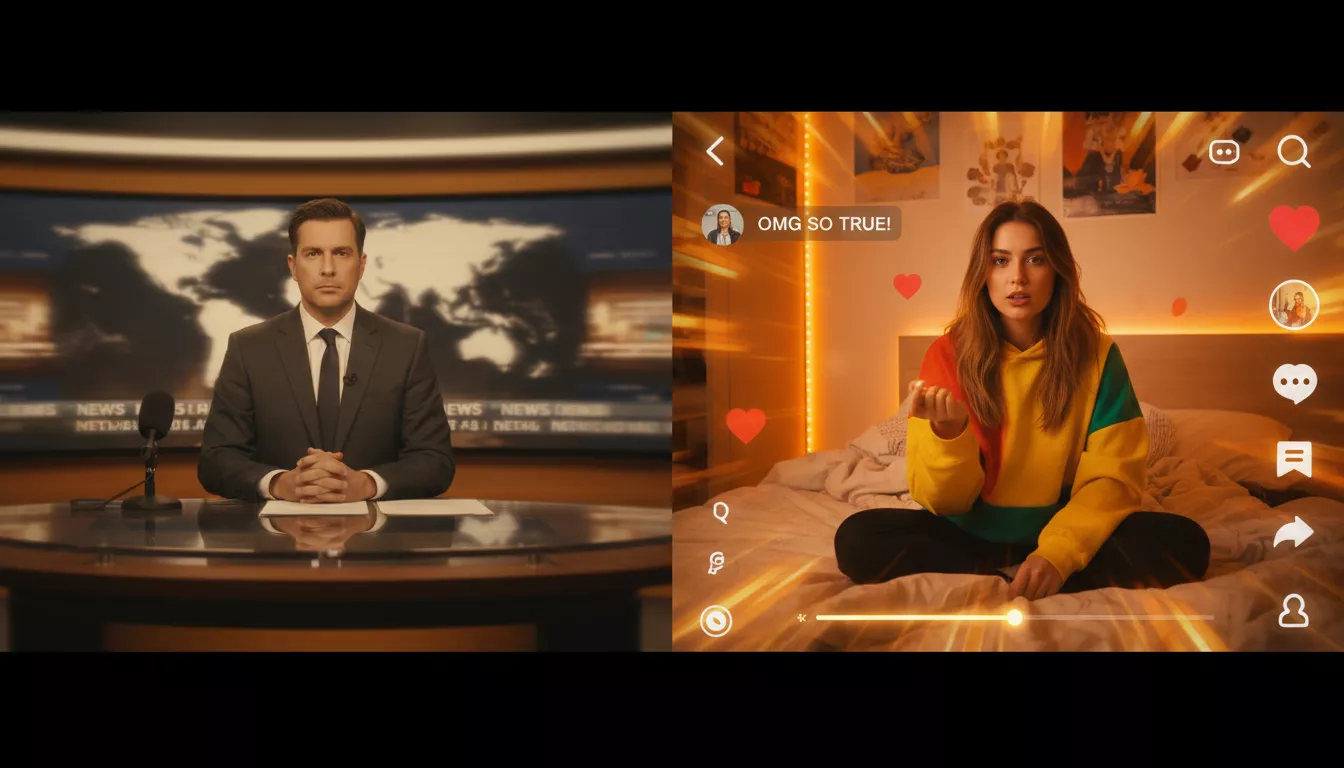
This isn't just a platform shift; it's a fundamental crisis of trust and a revolution in format. In 1985, Neil Postman's "Amusing Ourselves to Death" warned that 45-second TV news clips made civic discourse trivial. Today, TikTok's 10-second average view time makes Postman's era look like deep, long-form analysis.
The audience isn't just tolerating this brevity; they're demanding it. Users in one study described traditional news as "monotonous" and "pretty boring." The individual creator, often speaking directly to the camera from their bedroom, is perceived as more authentic and "straight to the point." We've decisively moved from an era of institutional trust to one of individual, personality-driven trust. The very definition of "journalist" is being renegotiated in real-time: 41% of adults 18-29 believe a person posting news on social media is a journalist.
The 'For You' Page as the New Editor-in-Chief
This entire ecosystem is impossible without the AI powering TikTok's "For You" page. Unlike the social graph of Facebook or the chronological firehose of X, TikTok's algorithm is a pure, hyper-personalized interest graph. It doesn't care who you follow; it cares, with terrifying precision, what you watch.
This AI-driven engine is the single most powerful force in information distribution today. It orchestrates a unique "news" feed for every single user, blending hard news from a creator like "Amanda Informed," political commentary from a Texas attorney, and experimental reporting from the Baltimore Banner with seamless, algorithmic precision. The "newsfluencer" isn't just fighting for eyeballs; they are providing the raw input for an AI that curates a bespoke reality for millions.
A New Playbook for the Information Economy
Legacy Media Must Unbundle: The "brand" of a major newspaper is less important on TikTok than the "brand" of its individual reporters. Media companies must empower their journalists to become creators and build individual trust, or risk becoming invisible.
The Rise of "Journalism-as-a-Service": Nonprofits like the News Creator Corps are emerging to backfill the role of the newsroom, offering training in fact-checking, ethics, and document analysis to individual creators. This is a new, decentralized support layer for the creator economy.
Authenticity Is the New Objectivity: A polished, buttoned-up broadcast signals inauthenticity on the platform. The "face-to-face" intimacy of the format is its core strength. For brands and creators, polish can now be a liability.
The New Gatekeeper Is Opaque: The old gatekeepers (editors, producers) were human. The new gatekeeper is an algorithm whose allegiances are unclear and whose decisions are absolute. Understanding its logic is the new media literacy.
The Algorithmic Newsstand
The panic over "TikTok news" is over. The platform isn't just a new channel; it's the new newsstand, and the AI algorithm is the only editor that matters.
Also read:
4 in 10 young Americans get news from TikTok, bypassing traditional media. This new, AI-driven creator class is changing information flow.
How TikTok's Algorithm Became the New Front Page
The New Mainstream
The narrative is no longer a future-tense warning; it’s a present-tense reality. New Pew Research data confirms that 43% of Americans under 30 now regularly get their news from TikTok. That’s a staggering jump from just 9% in 2020, and it confirms the platform has completed its pivot from dance-app curiosity to a primary node for information.
While legacy media outlets like The Washington Post maintain a presence, the real story is the disaggregation of news itself. The primary source is no longer the institution, but the individual "newsfluencer"—a new class of creator operating entirely outside traditional newsrooms, and often with more individual trust than the legacy brands they are replacing.
Trust, Triviality, and the Creator-as-Journalist
This isn't just a platform shift; it's a fundamental crisis of trust and a revolution in format. In 1985, Neil Postman's "Amusing Ourselves to Death" warned that 45-second TV news clips made civic discourse trivial. Today, TikTok's 10-second average view time makes Postman's era look like deep, long-form analysis.
The audience isn't just tolerating this brevity; they're demanding it. Users in one study described traditional news as "monotonous" and "pretty boring." The individual creator, often speaking directly to the camera from their bedroom, is perceived as more authentic and "straight to the point." We've decisively moved from an era of institutional trust to one of individual, personality-driven trust. The very definition of "journalist" is being renegotiated in real-time: 41% of adults 18-29 believe a person posting news on social media is a journalist.
The 'For You' Page as the New Editor-in-Chief
This entire ecosystem is impossible without the AI powering TikTok's "For You" page. Unlike the social graph of Facebook or the chronological firehose of X, TikTok's algorithm is a pure, hyper-personalized interest graph. It doesn't care who you follow; it cares, with terrifying precision, what you watch.
This AI-driven engine is the single most powerful force in information distribution today. It orchestrates a unique "news" feed for every single user, blending hard news from a creator like "Amanda Informed," political commentary from a Texas attorney, and experimental reporting from the Baltimore Banner with seamless, algorithmic precision. The "newsfluencer" isn't just fighting for eyeballs; they are providing the raw input for an AI that curates a bespoke reality for millions.
A New Playbook for the Information Economy
Legacy Media Must Unbundle: The "brand" of a major newspaper is less important on TikTok than the "brand" of its individual reporters. Media companies must empower their journalists to become creators and build individual trust, or risk becoming invisible.
The Rise of "Journalism-as-a-Service": Nonprofits like the News Creator Corps are emerging to backfill the role of the newsroom, offering training in fact-checking, ethics, and document analysis to individual creators. This is a new, decentralized support layer for the creator economy.
Authenticity Is the New Objectivity: A polished, buttoned-up broadcast signals inauthenticity on the platform. The "face-to-face" intimacy of the format is its core strength. For brands and creators, polish can now be a liability.
The New Gatekeeper Is Opaque: The old gatekeepers (editors, producers) were human. The new gatekeeper is an algorithm whose allegiances are unclear and whose decisions are absolute. Understanding its logic is the new media literacy.
The Algorithmic Newsstand
The panic over "TikTok news" is over. The platform isn't just a new channel; it's the new newsstand, and the AI algorithm is the only editor that matters.
Also read:
Other Blogs
Other Blogs
Check our other project Blogs with useful insight and information for your businesses
Other Blogs
Other Blogs
Check our other project Blogs with useful insight and information for your businesses