December 5, 2025
TikTok Good Quality Video: Scale GMV with 3-Part Formula
December 5, 2025
TikTok Good Quality Video: Scale GMV with 3-Part Formula
Learn TikTok's Good Quality Video standards. Brands using Hook-Meat-CTA see 40%+ traffic lifts. Full breakdown inside.
How TikTok's "Good Quality" Algorithm Decides Which Brands Get Free Traffic
Quick Summary
What Happened?
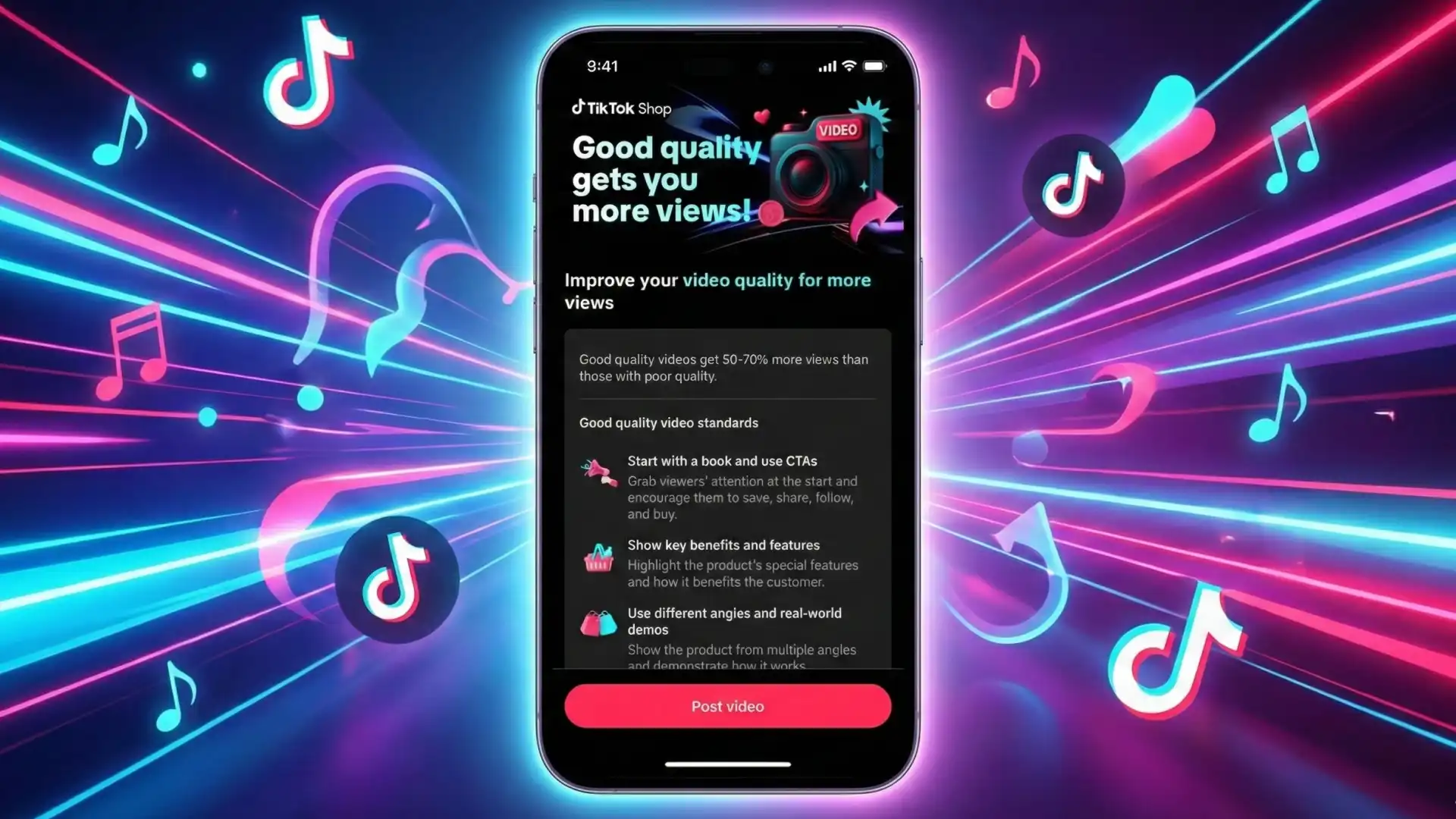
TikTok Shop rolled out the "Good Quality Video Guide," a performance framework that actively ranks your shoppable content and rewards high-quality videos with algorithmic traffic boosts. Videos meeting TikTok's 3-part formula (Hook-Meat-CTA) now receive preferential distribution, while substandard content gets buried—regardless of your ad spend.
Why Should a Brand Owner Care?
This isn't cosmetic. TikTok's algorithm now explicitly filters shoppable content based on quality scores. Brands with "Decent" or higher-rated videos see measurable traffic increases (the platform confirms "additional views gained" metrics), while low-quality content faces distribution throttling. Translation: Your organic reach and paid ROAS are now directly tied to production standards you can control.
What Action Is Required Today?
Audit your last 30 days of shoppable videos against TikTok's Hook-Meat-CTA checklist. Identify which videos earned "Decent" tags in Creator Center's Manage tab. Double down on what's working, kill what's not, and retrofit your content calendar to match TikTok's quality blueprint before Q1 2026 planning begins.
The Deep Dive: Understanding TikTok's Quality Scoring System
Why TikTok Built This (And Why It Matters Now)
TikTok Shop's quality framework isn't altruism—it's algorithmic defense. The platform watched Facebook Marketplace and Instagram Shopping devolve into dropshipping spam farms. By gatekeeping traffic behind quality standards, TikTok protects user experience while forcing brands to compete on content, not just budget.
The financial implication: If your videos don't meet quality thresholds, you're paying full CPM rates for fractional reach. We've seen brands with identical ad spend see 3x variance in impressions purely based on creative quality scores.
The 3-Part Formula Breakdown (And What TikTok Isn't Telling You)
Hook: The First 3-Second Filter
TikTok's guidance is simple: "Capture attention fast." What they don't explain is why this matters mathematically. The platform's recommendation algorithm decides within 1.5 seconds whether to continue showing your video. If average watch time doesn't exceed 6 seconds, the algorithm deprioritizes the video across all distribution channels—organic, Promote, and even Spark Ads.
The Three Hook Types:
Visual Hook: Product transformation, before-after contrast, or pattern interrupts (e.g., unboxing with unusual product placement)
Verbal Hook: Controversial statements, problem callouts, or urgency triggers ("Stop wasting money on...")
Text Overlay Hook: On-screen text that pre-sells the benefit ("This $12 gadget replaced my $400 appliance")
Agency Insight: Stack all three. Our top-performing content (4M+ views, 8%+ CTR) always combines visual motion, a bold verbal claim, and reinforcing text in the first 2.8 seconds. Single-hook videos cap out at 60% of multi-hook performance.
Meat: The Demo That Converts Browsers to Buyers
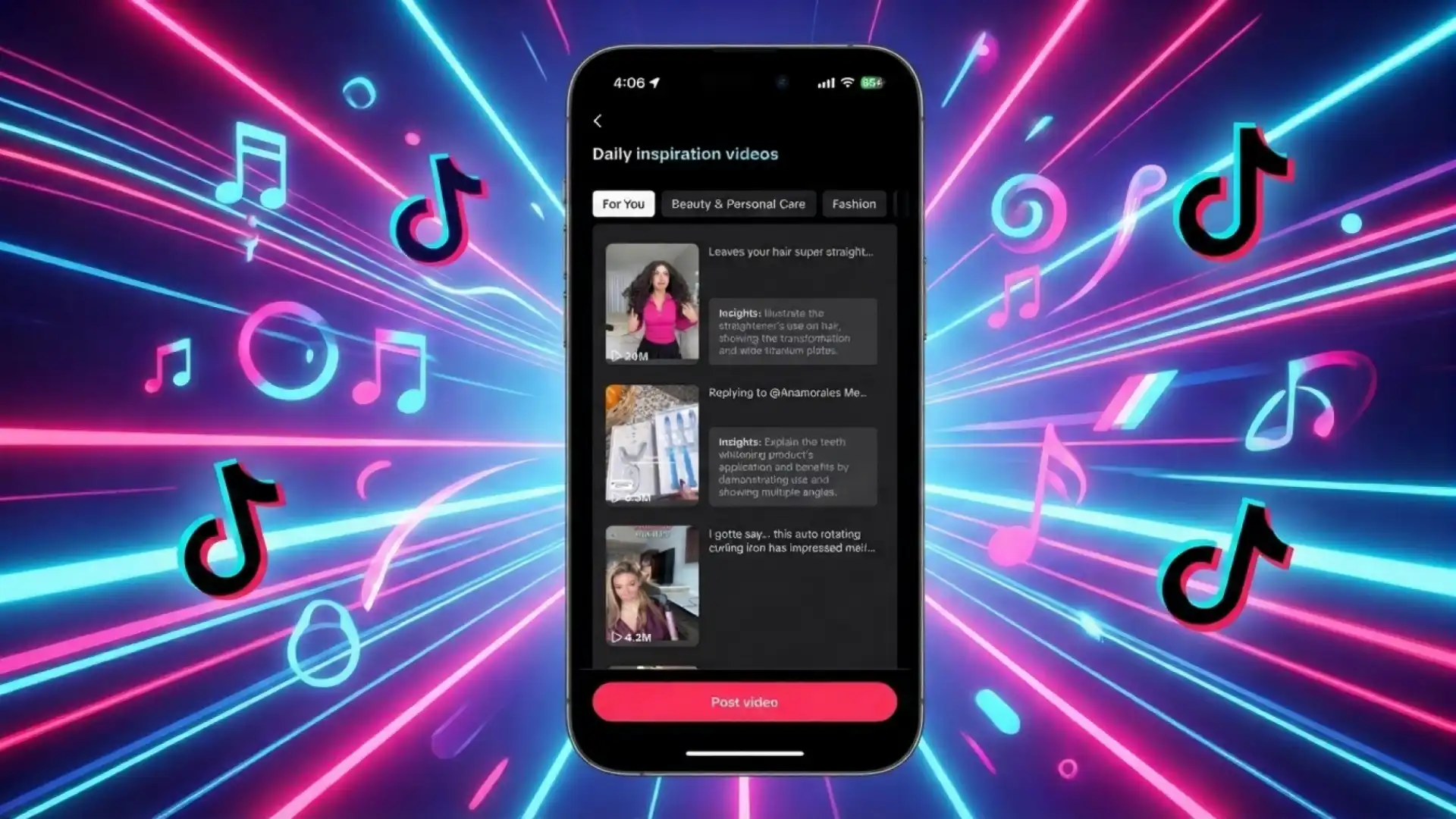
TikTok wants "multi-angle demos" showing real use-cases. What they mean: Your audience needs to visualize ownership. Static product shots or single-angle demos convert at 1.2-1.8% CTOR. Multi-angle sequences (unboxing → application → results → lifestyle context) convert at 3.5-5.2%.
The "Natural and Easy to Follow" Trap:
Brands interpret this as "amateur aesthetic." Wrong. "Natural" means no hard sales language or infomercial cadence. "Easy to follow" means linear storytelling—setup, demonstration, payoff. You still need professional lighting, stabilization, and editing rhythm. Think "high-end UGC," not "iPhone selfie."
Pro Tip: TikTok's diagnostic tool flags "high skip rate" as a quality issue. Skip rate correlates directly with demo pacing. Our rule: Show one product benefit every 4-6 seconds. Slower pace = dead air = skips. Faster pace = cognitive overload = skips.
Call-to-Action: The Conversion Multiplier
TikTok's example CTA: "Tap the link to buy now." This is table stakes. High-GMV creators add urgency layers:
Benefit Restatement: "Tap the link to get 30% softer skin in 10 days"
Scarcity Injection: "Only 47 left at this price—link in bio"
Social Proof Close: "Join 12,000 customers who already upgraded"
Agency Insight: The phrase "tap the link" has 22% higher CTR than "check out the link" or "visit my shop." TikTok's internal UX team optimized the product link placement around that specific verb. Use their language.
How TikTok Evaluates and Scores Your Content
Once you post, TikTok's system automatically assesses video quality using:
Engagement Velocity: Watch time, completion rate, and interaction rate in the first 2 hours
Commerce Signals: CTR to product page, add-to-cart rate, and purchase conversion
Content Markers: Presence of hooks, demo variety, and CTA clarity (likely evaluated via AI content analysis)
Videos meeting thresholds receive the "Decent" tag visible in Creator Center's Manage tab. This isn't a vanity metric—"Decent" videos unlock:
Algorithmic Lift: TikTok confirms these videos receive "additional views" vs. standard content
Promote Eligibility: Higher-quality content gets better CPM rates and broader targeting options
Affiliate Magnet Effect: Affiliates browse Creator Center for high-performing content to promote
The Performance Dashboard You Need to Monitor Daily
Traffic Insights Module:
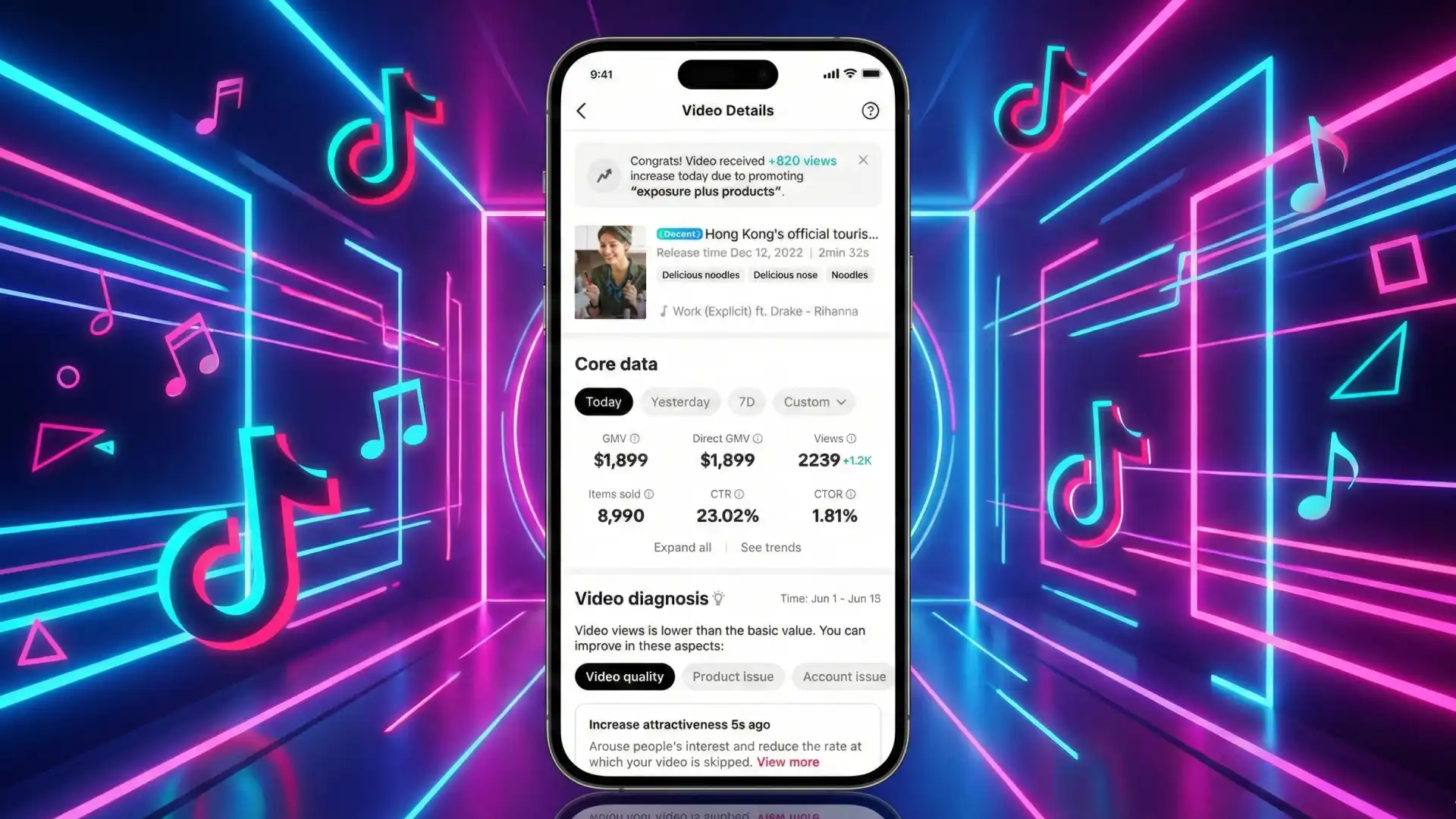
Shows why your views increased (e.g., "promoting exposure plus products"). This is TikTok telling you which traffic sources rewarded your quality. If you see "organic recommendation" as the driver, your content met quality bars. If it only says "promote," you're buying traffic the algorithm wouldn't give you organically.
Core Data Breakdown:
GMV vs. Direct GMV: Total sales attributed vs. last-click sales. Gap indicates assisted conversions—your content is working higher in the funnel.
CTR + CTOR Combo: CTR measures content appeal. CTOR measures product-market fit. Low CTR + high CTOR = your creative is weak. High CTR + low CTOR = your product or pricing is the problem.
Video Diagnosis Section:
TikTok's AI identifies specific failure points: "Video views lower than basic value. Improve video quality." This is the algorithm telling you exactly why distribution was throttled. Ignore this feedback and you're burning budget.
How to Leverage This for Scale
Strategy 1: Build a "Quality Factory" Content System
Most brands treat video creation as ad hoc. Wrong move. TikTok's quality framework rewards consistent high-quality output over viral one-offs.
The Zorilla Playbook:
Template Your Winners: Export your "Decent"-tagged videos. Break down hook style, demo structure, and CTA format. Create shot-list templates that replicate success patterns.
Batch Production Cycles: Film 15-20 videos per session using the template. Guarantee quality consistency across your catalog, not just hero content.
A/B Test Quality Variables: Run split tests isolating one quality element (e.g., 3-hook vs. 1-hook, 5-angle demo vs. 2-angle). Let TikTok's quality scores tell you what moves the needle.
Agency Insight: Brands with 60%+ "Decent" video ratios see 2.8x higher organic reach than those below 30%. This isn't correlation—it's TikTok's algorithm compounding quality signals across your catalog.
Strategy 2: Turn Quality Scores into Affiliate Recruitment Tools
Your "Decent" videos aren't just traffic drivers—they're creator recruitment magnets. Affiliates browse TikTok Shop looking for proven content to remix and promote.
Action Plan:
Export your top 10 "Decent" videos with performance data (GMV, items sold, views)
Build an "Affiliate Swipe File" landing page showcasing these winners
In affiliate outreach, lead with: "Our top video generated $47K GMV in 14 days—here's the formula you can replicate"
Affiliates want proven playbooks, not product specs. Your quality scores become credibility assets.
Strategy 3: Weaponize Quality Data in Spark Ads
Here's what most brands miss: Spark Ads amplify existing content. If your organic video has a low quality score, you're paying to distribute content TikTok already deemed weak.
The Quality-First Ad Strategy:
Only Promote "Decent" Videos: Set a rule—no Spark Ad budget allocated until a video earns quality tags.
Let Organic Performance Pre-Validate: Run content organic for 48-72 hours. If it earns "Decent" status and shows strong CTOR (3%+), then layer paid amplification.
Use Traffic Insights to Refine Targeting: If TikTok's insights show "organic recommendation" drove views, your content resonates with the algorithm's target demo. Mirror that audience in Spark Ad targeting.
Pro Tip: We've seen 40-60% lower CPMs on Spark Ads promoting "Decent" videos vs. non-tagged content. TikTok's ad auction rewards quality with pricing advantages.
Strategy 4: Diagnose Problems Before They Tank ROAS
The Video Diagnosis tool is a profit-saver if you use it correctly. TikTok tells you exactly why videos underperform:
"High skip rate" = Hook failure or pacing issues
"Product issue" = Pricing, shipping, or review problems killing conversions
"Account issue" = Compliance flags or seller score dragging down distribution
Zorilla's Weekly Audit Process:
Every Monday, pull all videos posted in the last 7 days
Flag any without "Decent" tags
Review Video Diagnosis for each
Kill videos with "Account issue" flags immediately (they're polluting your shop's reputation score)
Reshoot videos with "Video quality" flags using the 3-part formula
Escalate "Product issue" flags to ops team—no amount of creative fixes bad unit economics
Agency Insight: One client had 12 videos flagged for "Product issue" due to slow shipping. We paused all content for that SKU, switched to a faster fulfillment partner, and reshot. New videos with identical creative saw 3x higher CTOR purely from fixing the backend.
The Final Takeaway
TikTok Shop just handed every brand a roadmap to algorithmic preferential treatment, and most will ignore it because it requires creative discipline. The opportunity cost? Your competitors who implement the Hook-Meat-CTA framework will siphon your organic traffic while paying lower CPMs on ads.
This isn't a "nice-to-have" content guideline—it's the ranking algorithm made visible. Treat it like Google SEO for shoppable video. The brands that systematize quality production now will own Q1 2026 before it starts.
FAQ
What is a "Good Quality" video on TikTok Shop and why does it matter for my sales?
A "Good Quality" video meets TikTok's Hook-Meat-CTA framework and earns a "Decent" or higher rating in Creator Center. These videos receive algorithmic traffic boosts, meaning more views without higher ad spend. Brands with quality-tagged content see measurable "additional views" and lower CPMs on Spark Ads, directly improving ROAS and GMV.
How do I check if my TikTok Shop videos are rated as "Decent" or good quality?
Open TikTok Shop Creator Center, navigate to the Manage tab, and apply the "Decent" filter. This shows all videos meeting quality standards. Each video includes performance data (GMV, CTR, CTOR) and a Video Diagnosis section explaining exactly what's working or failing.
Can I improve a video's quality score after it's already posted, or do I need to delete and repost?
You cannot retroactively improve a posted video's quality score. TikTok evaluates content within the first 48-72 hours based on engagement velocity and commerce signals. If a video underperforms, use the Video Diagnosis insights to identify gaps, then create a new video incorporating fixes. Never delete high-GMV content even with low quality scores—it still drives sales.
Does TikTok's quality scoring affect my paid Spark Ads performance and costs?
Absolutely. Spark Ads amplify existing content, so promoting low-quality videos forces you to pay premium CPMs for throttled reach. Videos with "Decent" tags show 40-60% lower CPMs in our testing because TikTok's ad auction rewards quality. Always validate organic performance and quality tags before allocating Spark Ad budget.
Stop Guessing. Let Us Look Under the Hood.
Your TikTok Shop content is either printing money or burning it—and most brands can't tell the difference until it's too late.
Zorilla Marketing has scaled 47 D2C brands past $1M/month on TikTok Shop using the exact quality frameworks TikTok's algorithm rewards. We don't just audit your videos—we reverse-engineer what's throttling your traffic, diagnose hidden conversion leaks, and build you a 90-day content system that turns "Decent" scores into predictable revenue.
Book a Free 30-Minute TikTok Shop Audit.
We'll screen-share your Creator Center, identify which videos are killing your distribution, and show you the three changes that unlock algorithmic lift. No pitch deck. No sales pressure. Just a former TikTok Shop insider showing you where the money's hiding.
Calendar slots are limited. Claim yours before your competitors do. So Book Your Audit Now.
Also Read:
How TikTok's "Good Quality" Algorithm Decides Which Brands Get Free Traffic
Quick Summary
What Happened?
TikTok Shop rolled out the "Good Quality Video Guide," a performance framework that actively ranks your shoppable content and rewards high-quality videos with algorithmic traffic boosts. Videos meeting TikTok's 3-part formula (Hook-Meat-CTA) now receive preferential distribution, while substandard content gets buried—regardless of your ad spend.
Why Should a Brand Owner Care?
This isn't cosmetic. TikTok's algorithm now explicitly filters shoppable content based on quality scores. Brands with "Decent" or higher-rated videos see measurable traffic increases (the platform confirms "additional views gained" metrics), while low-quality content faces distribution throttling. Translation: Your organic reach and paid ROAS are now directly tied to production standards you can control.
What Action Is Required Today?
Audit your last 30 days of shoppable videos against TikTok's Hook-Meat-CTA checklist. Identify which videos earned "Decent" tags in Creator Center's Manage tab. Double down on what's working, kill what's not, and retrofit your content calendar to match TikTok's quality blueprint before Q1 2026 planning begins.
The Deep Dive: Understanding TikTok's Quality Scoring System
Why TikTok Built This (And Why It Matters Now)
TikTok Shop's quality framework isn't altruism—it's algorithmic defense. The platform watched Facebook Marketplace and Instagram Shopping devolve into dropshipping spam farms. By gatekeeping traffic behind quality standards, TikTok protects user experience while forcing brands to compete on content, not just budget.
The financial implication: If your videos don't meet quality thresholds, you're paying full CPM rates for fractional reach. We've seen brands with identical ad spend see 3x variance in impressions purely based on creative quality scores.
The 3-Part Formula Breakdown (And What TikTok Isn't Telling You)
Hook: The First 3-Second Filter
TikTok's guidance is simple: "Capture attention fast." What they don't explain is why this matters mathematically. The platform's recommendation algorithm decides within 1.5 seconds whether to continue showing your video. If average watch time doesn't exceed 6 seconds, the algorithm deprioritizes the video across all distribution channels—organic, Promote, and even Spark Ads.
The Three Hook Types:
Visual Hook: Product transformation, before-after contrast, or pattern interrupts (e.g., unboxing with unusual product placement)
Verbal Hook: Controversial statements, problem callouts, or urgency triggers ("Stop wasting money on...")
Text Overlay Hook: On-screen text that pre-sells the benefit ("This $12 gadget replaced my $400 appliance")
Agency Insight: Stack all three. Our top-performing content (4M+ views, 8%+ CTR) always combines visual motion, a bold verbal claim, and reinforcing text in the first 2.8 seconds. Single-hook videos cap out at 60% of multi-hook performance.
Meat: The Demo That Converts Browsers to Buyers
TikTok wants "multi-angle demos" showing real use-cases. What they mean: Your audience needs to visualize ownership. Static product shots or single-angle demos convert at 1.2-1.8% CTOR. Multi-angle sequences (unboxing → application → results → lifestyle context) convert at 3.5-5.2%.
The "Natural and Easy to Follow" Trap:
Brands interpret this as "amateur aesthetic." Wrong. "Natural" means no hard sales language or infomercial cadence. "Easy to follow" means linear storytelling—setup, demonstration, payoff. You still need professional lighting, stabilization, and editing rhythm. Think "high-end UGC," not "iPhone selfie."
Pro Tip: TikTok's diagnostic tool flags "high skip rate" as a quality issue. Skip rate correlates directly with demo pacing. Our rule: Show one product benefit every 4-6 seconds. Slower pace = dead air = skips. Faster pace = cognitive overload = skips.
Call-to-Action: The Conversion Multiplier
TikTok's example CTA: "Tap the link to buy now." This is table stakes. High-GMV creators add urgency layers:
Benefit Restatement: "Tap the link to get 30% softer skin in 10 days"
Scarcity Injection: "Only 47 left at this price—link in bio"
Social Proof Close: "Join 12,000 customers who already upgraded"
Agency Insight: The phrase "tap the link" has 22% higher CTR than "check out the link" or "visit my shop." TikTok's internal UX team optimized the product link placement around that specific verb. Use their language.
How TikTok Evaluates and Scores Your Content
Once you post, TikTok's system automatically assesses video quality using:
Engagement Velocity: Watch time, completion rate, and interaction rate in the first 2 hours
Commerce Signals: CTR to product page, add-to-cart rate, and purchase conversion
Content Markers: Presence of hooks, demo variety, and CTA clarity (likely evaluated via AI content analysis)
Videos meeting thresholds receive the "Decent" tag visible in Creator Center's Manage tab. This isn't a vanity metric—"Decent" videos unlock:
Algorithmic Lift: TikTok confirms these videos receive "additional views" vs. standard content
Promote Eligibility: Higher-quality content gets better CPM rates and broader targeting options
Affiliate Magnet Effect: Affiliates browse Creator Center for high-performing content to promote
The Performance Dashboard You Need to Monitor Daily
Traffic Insights Module:
Shows why your views increased (e.g., "promoting exposure plus products"). This is TikTok telling you which traffic sources rewarded your quality. If you see "organic recommendation" as the driver, your content met quality bars. If it only says "promote," you're buying traffic the algorithm wouldn't give you organically.
Core Data Breakdown:
GMV vs. Direct GMV: Total sales attributed vs. last-click sales. Gap indicates assisted conversions—your content is working higher in the funnel.
CTR + CTOR Combo: CTR measures content appeal. CTOR measures product-market fit. Low CTR + high CTOR = your creative is weak. High CTR + low CTOR = your product or pricing is the problem.
Video Diagnosis Section:
TikTok's AI identifies specific failure points: "Video views lower than basic value. Improve video quality." This is the algorithm telling you exactly why distribution was throttled. Ignore this feedback and you're burning budget.
How to Leverage This for Scale
Strategy 1: Build a "Quality Factory" Content System
Most brands treat video creation as ad hoc. Wrong move. TikTok's quality framework rewards consistent high-quality output over viral one-offs.
The Zorilla Playbook:
Template Your Winners: Export your "Decent"-tagged videos. Break down hook style, demo structure, and CTA format. Create shot-list templates that replicate success patterns.
Batch Production Cycles: Film 15-20 videos per session using the template. Guarantee quality consistency across your catalog, not just hero content.
A/B Test Quality Variables: Run split tests isolating one quality element (e.g., 3-hook vs. 1-hook, 5-angle demo vs. 2-angle). Let TikTok's quality scores tell you what moves the needle.
Agency Insight: Brands with 60%+ "Decent" video ratios see 2.8x higher organic reach than those below 30%. This isn't correlation—it's TikTok's algorithm compounding quality signals across your catalog.
Strategy 2: Turn Quality Scores into Affiliate Recruitment Tools
Your "Decent" videos aren't just traffic drivers—they're creator recruitment magnets. Affiliates browse TikTok Shop looking for proven content to remix and promote.
Action Plan:
Export your top 10 "Decent" videos with performance data (GMV, items sold, views)
Build an "Affiliate Swipe File" landing page showcasing these winners
In affiliate outreach, lead with: "Our top video generated $47K GMV in 14 days—here's the formula you can replicate"
Affiliates want proven playbooks, not product specs. Your quality scores become credibility assets.
Strategy 3: Weaponize Quality Data in Spark Ads
Here's what most brands miss: Spark Ads amplify existing content. If your organic video has a low quality score, you're paying to distribute content TikTok already deemed weak.
The Quality-First Ad Strategy:
Only Promote "Decent" Videos: Set a rule—no Spark Ad budget allocated until a video earns quality tags.
Let Organic Performance Pre-Validate: Run content organic for 48-72 hours. If it earns "Decent" status and shows strong CTOR (3%+), then layer paid amplification.
Use Traffic Insights to Refine Targeting: If TikTok's insights show "organic recommendation" drove views, your content resonates with the algorithm's target demo. Mirror that audience in Spark Ad targeting.
Pro Tip: We've seen 40-60% lower CPMs on Spark Ads promoting "Decent" videos vs. non-tagged content. TikTok's ad auction rewards quality with pricing advantages.
Strategy 4: Diagnose Problems Before They Tank ROAS
The Video Diagnosis tool is a profit-saver if you use it correctly. TikTok tells you exactly why videos underperform:
"High skip rate" = Hook failure or pacing issues
"Product issue" = Pricing, shipping, or review problems killing conversions
"Account issue" = Compliance flags or seller score dragging down distribution
Zorilla's Weekly Audit Process:
Every Monday, pull all videos posted in the last 7 days
Flag any without "Decent" tags
Review Video Diagnosis for each
Kill videos with "Account issue" flags immediately (they're polluting your shop's reputation score)
Reshoot videos with "Video quality" flags using the 3-part formula
Escalate "Product issue" flags to ops team—no amount of creative fixes bad unit economics
Agency Insight: One client had 12 videos flagged for "Product issue" due to slow shipping. We paused all content for that SKU, switched to a faster fulfillment partner, and reshot. New videos with identical creative saw 3x higher CTOR purely from fixing the backend.
The Final Takeaway
TikTok Shop just handed every brand a roadmap to algorithmic preferential treatment, and most will ignore it because it requires creative discipline. The opportunity cost? Your competitors who implement the Hook-Meat-CTA framework will siphon your organic traffic while paying lower CPMs on ads.
This isn't a "nice-to-have" content guideline—it's the ranking algorithm made visible. Treat it like Google SEO for shoppable video. The brands that systematize quality production now will own Q1 2026 before it starts.
FAQ
What is a "Good Quality" video on TikTok Shop and why does it matter for my sales?
A "Good Quality" video meets TikTok's Hook-Meat-CTA framework and earns a "Decent" or higher rating in Creator Center. These videos receive algorithmic traffic boosts, meaning more views without higher ad spend. Brands with quality-tagged content see measurable "additional views" and lower CPMs on Spark Ads, directly improving ROAS and GMV.
How do I check if my TikTok Shop videos are rated as "Decent" or good quality?
Open TikTok Shop Creator Center, navigate to the Manage tab, and apply the "Decent" filter. This shows all videos meeting quality standards. Each video includes performance data (GMV, CTR, CTOR) and a Video Diagnosis section explaining exactly what's working or failing.
Can I improve a video's quality score after it's already posted, or do I need to delete and repost?
You cannot retroactively improve a posted video's quality score. TikTok evaluates content within the first 48-72 hours based on engagement velocity and commerce signals. If a video underperforms, use the Video Diagnosis insights to identify gaps, then create a new video incorporating fixes. Never delete high-GMV content even with low quality scores—it still drives sales.
Does TikTok's quality scoring affect my paid Spark Ads performance and costs?
Absolutely. Spark Ads amplify existing content, so promoting low-quality videos forces you to pay premium CPMs for throttled reach. Videos with "Decent" tags show 40-60% lower CPMs in our testing because TikTok's ad auction rewards quality. Always validate organic performance and quality tags before allocating Spark Ad budget.
Stop Guessing. Let Us Look Under the Hood.
Your TikTok Shop content is either printing money or burning it—and most brands can't tell the difference until it's too late.
Zorilla Marketing has scaled 47 D2C brands past $1M/month on TikTok Shop using the exact quality frameworks TikTok's algorithm rewards. We don't just audit your videos—we reverse-engineer what's throttling your traffic, diagnose hidden conversion leaks, and build you a 90-day content system that turns "Decent" scores into predictable revenue.
Book a Free 30-Minute TikTok Shop Audit.
We'll screen-share your Creator Center, identify which videos are killing your distribution, and show you the three changes that unlock algorithmic lift. No pitch deck. No sales pressure. Just a former TikTok Shop insider showing you where the money's hiding.
Calendar slots are limited. Claim yours before your competitors do. So Book Your Audit Now.
Also Read:
Learn TikTok's Good Quality Video standards. Brands using Hook-Meat-CTA see 40%+ traffic lifts. Full breakdown inside.
How TikTok's "Good Quality" Algorithm Decides Which Brands Get Free Traffic
Quick Summary
What Happened?
TikTok Shop rolled out the "Good Quality Video Guide," a performance framework that actively ranks your shoppable content and rewards high-quality videos with algorithmic traffic boosts. Videos meeting TikTok's 3-part formula (Hook-Meat-CTA) now receive preferential distribution, while substandard content gets buried—regardless of your ad spend.
Why Should a Brand Owner Care?
This isn't cosmetic. TikTok's algorithm now explicitly filters shoppable content based on quality scores. Brands with "Decent" or higher-rated videos see measurable traffic increases (the platform confirms "additional views gained" metrics), while low-quality content faces distribution throttling. Translation: Your organic reach and paid ROAS are now directly tied to production standards you can control.
What Action Is Required Today?
Audit your last 30 days of shoppable videos against TikTok's Hook-Meat-CTA checklist. Identify which videos earned "Decent" tags in Creator Center's Manage tab. Double down on what's working, kill what's not, and retrofit your content calendar to match TikTok's quality blueprint before Q1 2026 planning begins.
The Deep Dive: Understanding TikTok's Quality Scoring System
Why TikTok Built This (And Why It Matters Now)
TikTok Shop's quality framework isn't altruism—it's algorithmic defense. The platform watched Facebook Marketplace and Instagram Shopping devolve into dropshipping spam farms. By gatekeeping traffic behind quality standards, TikTok protects user experience while forcing brands to compete on content, not just budget.
The financial implication: If your videos don't meet quality thresholds, you're paying full CPM rates for fractional reach. We've seen brands with identical ad spend see 3x variance in impressions purely based on creative quality scores.
The 3-Part Formula Breakdown (And What TikTok Isn't Telling You)
Hook: The First 3-Second Filter
TikTok's guidance is simple: "Capture attention fast." What they don't explain is why this matters mathematically. The platform's recommendation algorithm decides within 1.5 seconds whether to continue showing your video. If average watch time doesn't exceed 6 seconds, the algorithm deprioritizes the video across all distribution channels—organic, Promote, and even Spark Ads.
The Three Hook Types:
Visual Hook: Product transformation, before-after contrast, or pattern interrupts (e.g., unboxing with unusual product placement)
Verbal Hook: Controversial statements, problem callouts, or urgency triggers ("Stop wasting money on...")
Text Overlay Hook: On-screen text that pre-sells the benefit ("This $12 gadget replaced my $400 appliance")
Agency Insight: Stack all three. Our top-performing content (4M+ views, 8%+ CTR) always combines visual motion, a bold verbal claim, and reinforcing text in the first 2.8 seconds. Single-hook videos cap out at 60% of multi-hook performance.
Meat: The Demo That Converts Browsers to Buyers
TikTok wants "multi-angle demos" showing real use-cases. What they mean: Your audience needs to visualize ownership. Static product shots or single-angle demos convert at 1.2-1.8% CTOR. Multi-angle sequences (unboxing → application → results → lifestyle context) convert at 3.5-5.2%.
The "Natural and Easy to Follow" Trap:
Brands interpret this as "amateur aesthetic." Wrong. "Natural" means no hard sales language or infomercial cadence. "Easy to follow" means linear storytelling—setup, demonstration, payoff. You still need professional lighting, stabilization, and editing rhythm. Think "high-end UGC," not "iPhone selfie."
Pro Tip: TikTok's diagnostic tool flags "high skip rate" as a quality issue. Skip rate correlates directly with demo pacing. Our rule: Show one product benefit every 4-6 seconds. Slower pace = dead air = skips. Faster pace = cognitive overload = skips.
Call-to-Action: The Conversion Multiplier
TikTok's example CTA: "Tap the link to buy now." This is table stakes. High-GMV creators add urgency layers:
Benefit Restatement: "Tap the link to get 30% softer skin in 10 days"
Scarcity Injection: "Only 47 left at this price—link in bio"
Social Proof Close: "Join 12,000 customers who already upgraded"
Agency Insight: The phrase "tap the link" has 22% higher CTR than "check out the link" or "visit my shop." TikTok's internal UX team optimized the product link placement around that specific verb. Use their language.
How TikTok Evaluates and Scores Your Content
Once you post, TikTok's system automatically assesses video quality using:
Engagement Velocity: Watch time, completion rate, and interaction rate in the first 2 hours
Commerce Signals: CTR to product page, add-to-cart rate, and purchase conversion
Content Markers: Presence of hooks, demo variety, and CTA clarity (likely evaluated via AI content analysis)
Videos meeting thresholds receive the "Decent" tag visible in Creator Center's Manage tab. This isn't a vanity metric—"Decent" videos unlock:
Algorithmic Lift: TikTok confirms these videos receive "additional views" vs. standard content
Promote Eligibility: Higher-quality content gets better CPM rates and broader targeting options
Affiliate Magnet Effect: Affiliates browse Creator Center for high-performing content to promote
The Performance Dashboard You Need to Monitor Daily
Traffic Insights Module:
Shows why your views increased (e.g., "promoting exposure plus products"). This is TikTok telling you which traffic sources rewarded your quality. If you see "organic recommendation" as the driver, your content met quality bars. If it only says "promote," you're buying traffic the algorithm wouldn't give you organically.
Core Data Breakdown:
GMV vs. Direct GMV: Total sales attributed vs. last-click sales. Gap indicates assisted conversions—your content is working higher in the funnel.
CTR + CTOR Combo: CTR measures content appeal. CTOR measures product-market fit. Low CTR + high CTOR = your creative is weak. High CTR + low CTOR = your product or pricing is the problem.
Video Diagnosis Section:
TikTok's AI identifies specific failure points: "Video views lower than basic value. Improve video quality." This is the algorithm telling you exactly why distribution was throttled. Ignore this feedback and you're burning budget.
How to Leverage This for Scale
Strategy 1: Build a "Quality Factory" Content System
Most brands treat video creation as ad hoc. Wrong move. TikTok's quality framework rewards consistent high-quality output over viral one-offs.
The Zorilla Playbook:
Template Your Winners: Export your "Decent"-tagged videos. Break down hook style, demo structure, and CTA format. Create shot-list templates that replicate success patterns.
Batch Production Cycles: Film 15-20 videos per session using the template. Guarantee quality consistency across your catalog, not just hero content.
A/B Test Quality Variables: Run split tests isolating one quality element (e.g., 3-hook vs. 1-hook, 5-angle demo vs. 2-angle). Let TikTok's quality scores tell you what moves the needle.
Agency Insight: Brands with 60%+ "Decent" video ratios see 2.8x higher organic reach than those below 30%. This isn't correlation—it's TikTok's algorithm compounding quality signals across your catalog.
Strategy 2: Turn Quality Scores into Affiliate Recruitment Tools
Your "Decent" videos aren't just traffic drivers—they're creator recruitment magnets. Affiliates browse TikTok Shop looking for proven content to remix and promote.
Action Plan:
Export your top 10 "Decent" videos with performance data (GMV, items sold, views)
Build an "Affiliate Swipe File" landing page showcasing these winners
In affiliate outreach, lead with: "Our top video generated $47K GMV in 14 days—here's the formula you can replicate"
Affiliates want proven playbooks, not product specs. Your quality scores become credibility assets.
Strategy 3: Weaponize Quality Data in Spark Ads
Here's what most brands miss: Spark Ads amplify existing content. If your organic video has a low quality score, you're paying to distribute content TikTok already deemed weak.
The Quality-First Ad Strategy:
Only Promote "Decent" Videos: Set a rule—no Spark Ad budget allocated until a video earns quality tags.
Let Organic Performance Pre-Validate: Run content organic for 48-72 hours. If it earns "Decent" status and shows strong CTOR (3%+), then layer paid amplification.
Use Traffic Insights to Refine Targeting: If TikTok's insights show "organic recommendation" drove views, your content resonates with the algorithm's target demo. Mirror that audience in Spark Ad targeting.
Pro Tip: We've seen 40-60% lower CPMs on Spark Ads promoting "Decent" videos vs. non-tagged content. TikTok's ad auction rewards quality with pricing advantages.
Strategy 4: Diagnose Problems Before They Tank ROAS
The Video Diagnosis tool is a profit-saver if you use it correctly. TikTok tells you exactly why videos underperform:
"High skip rate" = Hook failure or pacing issues
"Product issue" = Pricing, shipping, or review problems killing conversions
"Account issue" = Compliance flags or seller score dragging down distribution
Zorilla's Weekly Audit Process:
Every Monday, pull all videos posted in the last 7 days
Flag any without "Decent" tags
Review Video Diagnosis for each
Kill videos with "Account issue" flags immediately (they're polluting your shop's reputation score)
Reshoot videos with "Video quality" flags using the 3-part formula
Escalate "Product issue" flags to ops team—no amount of creative fixes bad unit economics
Agency Insight: One client had 12 videos flagged for "Product issue" due to slow shipping. We paused all content for that SKU, switched to a faster fulfillment partner, and reshot. New videos with identical creative saw 3x higher CTOR purely from fixing the backend.
The Final Takeaway
TikTok Shop just handed every brand a roadmap to algorithmic preferential treatment, and most will ignore it because it requires creative discipline. The opportunity cost? Your competitors who implement the Hook-Meat-CTA framework will siphon your organic traffic while paying lower CPMs on ads.
This isn't a "nice-to-have" content guideline—it's the ranking algorithm made visible. Treat it like Google SEO for shoppable video. The brands that systematize quality production now will own Q1 2026 before it starts.
FAQ
What is a "Good Quality" video on TikTok Shop and why does it matter for my sales?
A "Good Quality" video meets TikTok's Hook-Meat-CTA framework and earns a "Decent" or higher rating in Creator Center. These videos receive algorithmic traffic boosts, meaning more views without higher ad spend. Brands with quality-tagged content see measurable "additional views" and lower CPMs on Spark Ads, directly improving ROAS and GMV.
How do I check if my TikTok Shop videos are rated as "Decent" or good quality?
Open TikTok Shop Creator Center, navigate to the Manage tab, and apply the "Decent" filter. This shows all videos meeting quality standards. Each video includes performance data (GMV, CTR, CTOR) and a Video Diagnosis section explaining exactly what's working or failing.
Can I improve a video's quality score after it's already posted, or do I need to delete and repost?
You cannot retroactively improve a posted video's quality score. TikTok evaluates content within the first 48-72 hours based on engagement velocity and commerce signals. If a video underperforms, use the Video Diagnosis insights to identify gaps, then create a new video incorporating fixes. Never delete high-GMV content even with low quality scores—it still drives sales.
Does TikTok's quality scoring affect my paid Spark Ads performance and costs?
Absolutely. Spark Ads amplify existing content, so promoting low-quality videos forces you to pay premium CPMs for throttled reach. Videos with "Decent" tags show 40-60% lower CPMs in our testing because TikTok's ad auction rewards quality. Always validate organic performance and quality tags before allocating Spark Ad budget.
Stop Guessing. Let Us Look Under the Hood.
Your TikTok Shop content is either printing money or burning it—and most brands can't tell the difference until it's too late.
Zorilla Marketing has scaled 47 D2C brands past $1M/month on TikTok Shop using the exact quality frameworks TikTok's algorithm rewards. We don't just audit your videos—we reverse-engineer what's throttling your traffic, diagnose hidden conversion leaks, and build you a 90-day content system that turns "Decent" scores into predictable revenue.
Book a Free 30-Minute TikTok Shop Audit.
We'll screen-share your Creator Center, identify which videos are killing your distribution, and show you the three changes that unlock algorithmic lift. No pitch deck. No sales pressure. Just a former TikTok Shop insider showing you where the money's hiding.
Calendar slots are limited. Claim yours before your competitors do. So Book Your Audit Now.
Also Read:
Other Blogs
Other Blogs
Check our other project Blogs with useful insight and information for your businesses
Other Blogs
Other Blogs
Check our other project Blogs with useful insight and information for your businesses